Don’t waste months on a side project without knowing if it can make money.
Want to build something that could replace your income? Commit helps busy people use limited time to validate whether a project will work — so they stop wasting months on the wrong thing and move forward with the right one.
Why most side projects stall
Most people don't lack motivation. They lack a fast, reliable way to prove whether what they're working on is actually worth continuing.
Sometimes they're building in private. Sometimes they're solving the wrong problem. Sometimes the problem is real, but they're testing it in the wrong place or with the wrong people.
Without clear success criteria and real-world signal, they keep going — or stop — without ever knowing if the idea was right.
That's not a failure of effort. It's a failure of proof.
Commit exists to fix this.

Make progress without guessing.
Stop without regret.
Progress needs proof
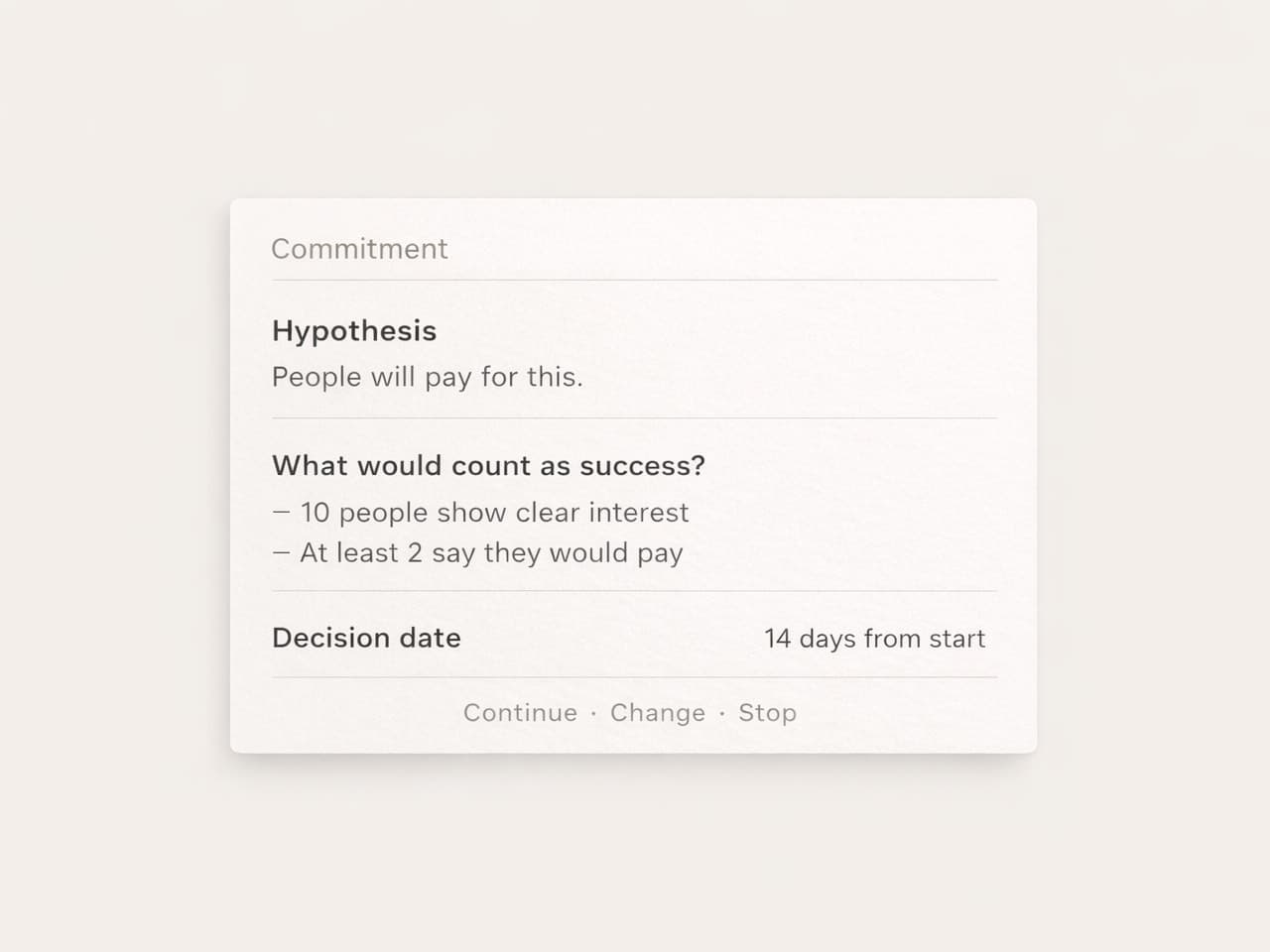
Working harder doesn't create momentum — evidence does. Commit forces you to define what "working" means before you invest months, so progress is something you can see rather than something you hope for.
Limited time deserves structure
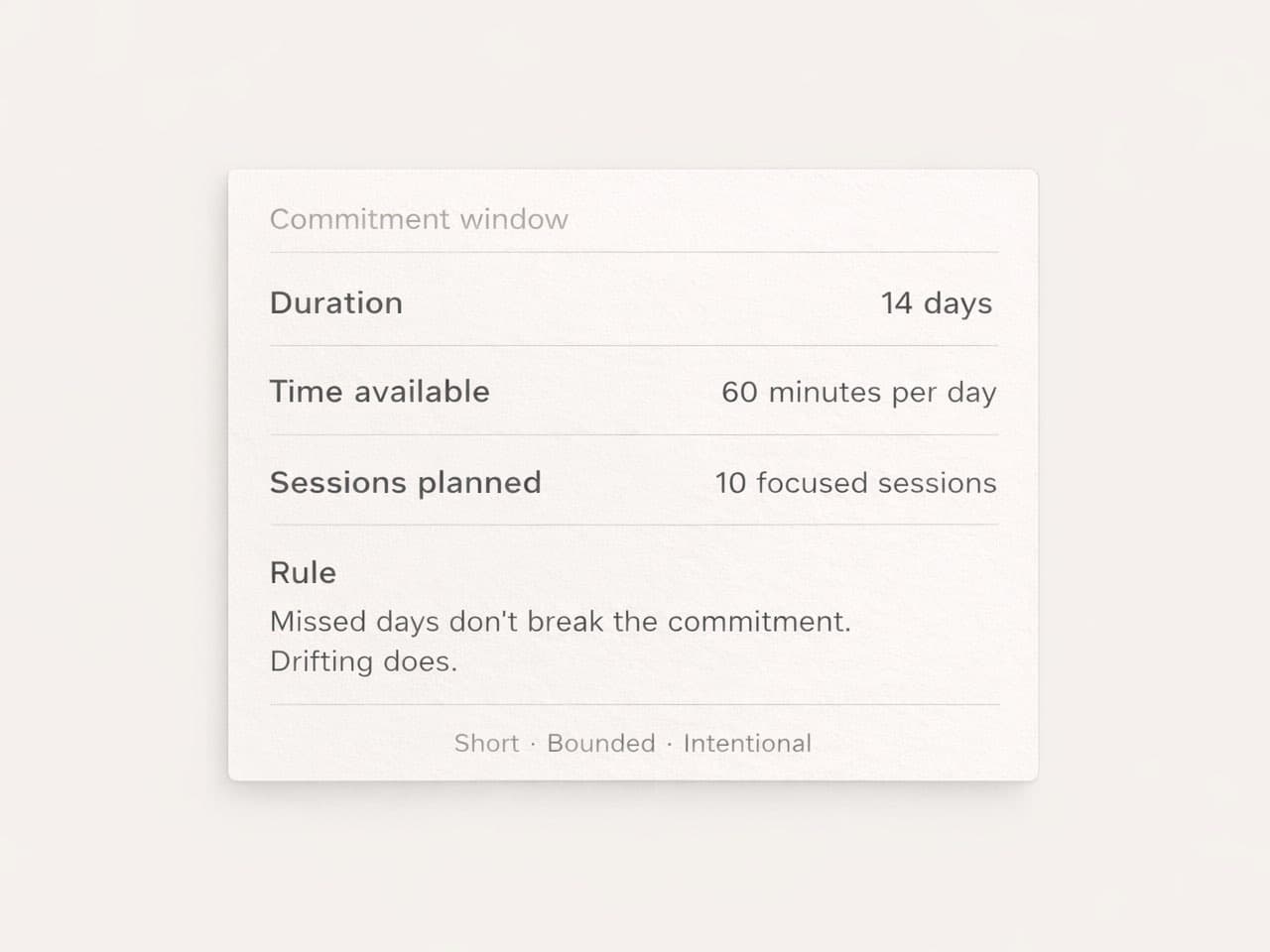
When you're building in short windows — evenings, weekends, about an hour a day — open-ended projects don't survive. Commit turns limited time into clear outcomes, one focused commitment at a time.
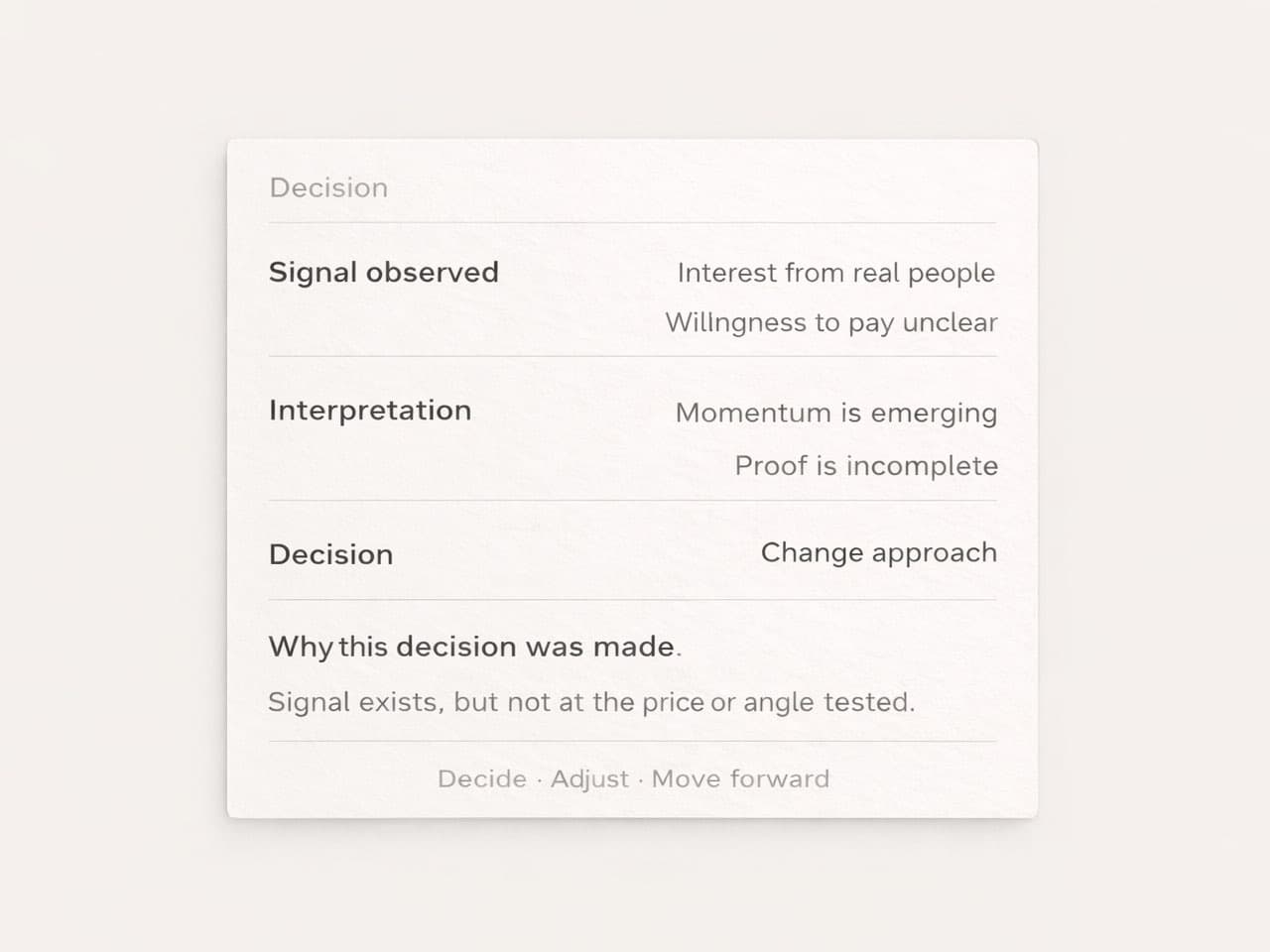
Decisions beat motivation
Most people rely on motivation to decide what to work on next, which leads to hesitation and drift. Commit replaces motivation with pre-made decisions, so each session moves you forward or tells you to stop.
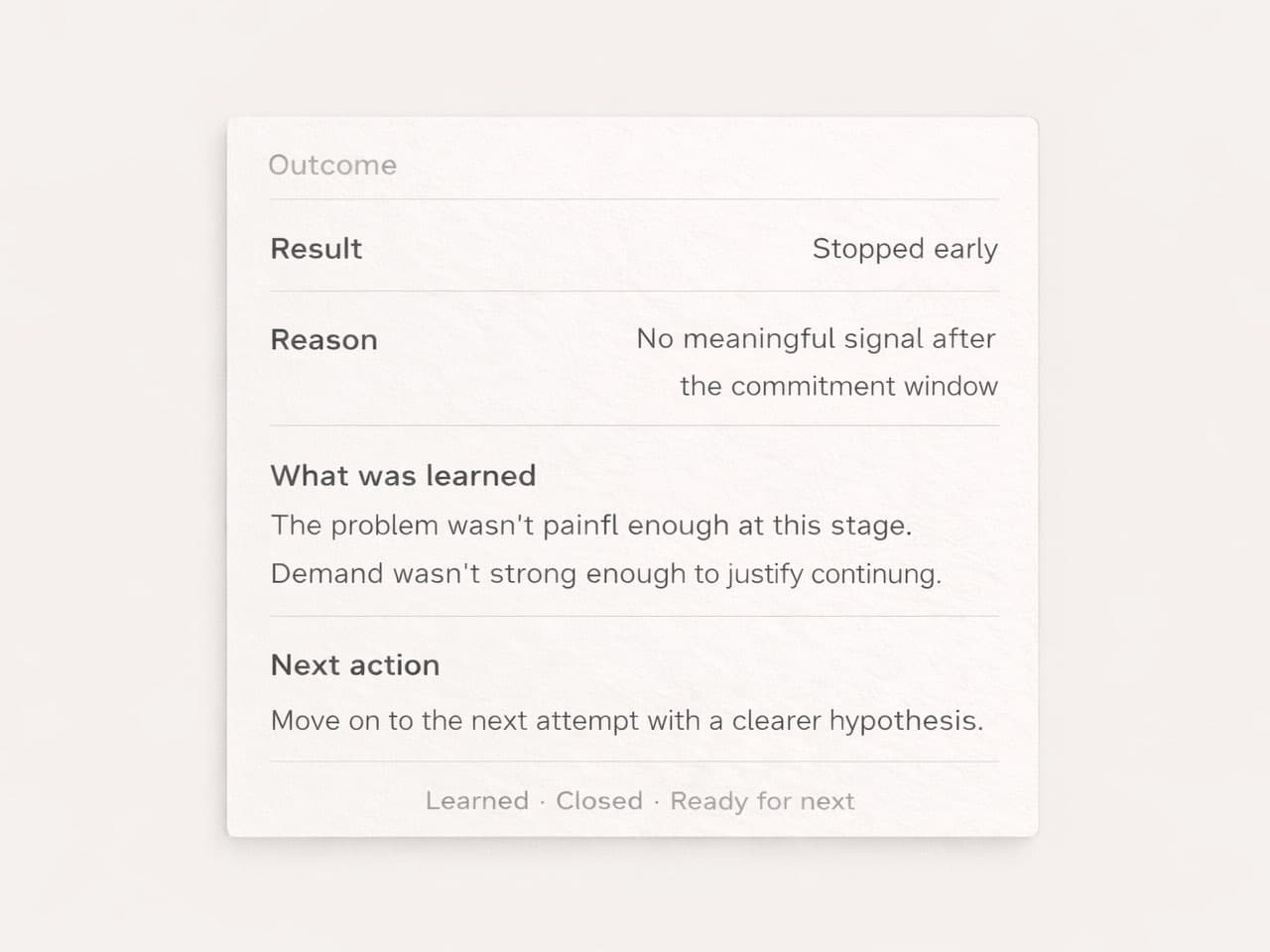
Stopping early is progress
Quitting without clarity feels like failure. Commit lets you stop when the evidence says it's right, so you can redirect your effort confidently instead of wondering if you quit too soon.
A clear attempt, with a clear end.
A commitment isn't a plan or a promise. It's a time-boxed attempt to prove whether something is worth continuing.
Typical length of a commitment
Designed for limited time,
not full-time founders
You set a concrete goal and decide what real signal would look like before you start.
You put the idea in front of real people and look for evidence — interest, conversations, willingness to pay.
If momentum is there, you continue. If it isn't, you stop early with clarity and move on to the next attempt.
Common questions
Stop guessing. Try properly.
Commit helps you use limited time to figure out what's worth continuing — and move on confidently when it's not.